

Running Primer – Part 8
In this part of the series, you’ll be introduced to various terms and ideas that didn’t have a good fit in other parts of the primer.
V02 Max

A measure of the maximum amount of oxygen your body can utilize during intense exercise. It reflects your aerobic capacity, essentially how efficiently your heart, lungs, and muscles can use oxygen to generate energy.
Key Points About VO2 Max:
- Measurement: VO2 Max is usually measured in milliliters of oxygen consumed per minute per kilogram of body weight (ml/kg/min). It can be assessed through exercise tests, typically on a treadmill or stationary bike, where the intensity is gradually increased until exhaustion.
- Physiological Indicator: A higher VO2 Max indicates better cardiovascular fitness and endurance. Athletes, especially in endurance sports like running, cycling, or swimming, typically have higher VO2 Max values.
- Training Impact: VO2 Max can be improved with consistent aerobic exercise. High-intensity interval training (HIIT) is particularly effective at boosting VO2 Max.
Importance of VO2 Max:
- Performance Predictor: VO2 Max is a strong predictor of aerobic performance. Athletes with a higher VO2 Max can sustain high-intensity efforts longer because their bodies are more efficient at using oxygen.
- Health Indicator: A higher VO2 Max is associated with a lower risk of cardiovascular diseases, better metabolic health, and overall longevity. It reflects how well your cardiovascular system functions.
- Training Guidance: Knowing your VO2 Max helps in designing effective training programs. It allows you to tailor the intensity of your workouts to improve your aerobic capacity more effectively.
In summary, VO2 Max is a crucial measure of cardiovascular fitness and overall health, with significant implications for athletic performance and well-being.
As a beginning runner, you really don’t need to focus attention on this metric, but it is good to know about it as people love talking about their V02 Max number. If you have a running watch or app, it will likely guestimate your V02 Max using data from your past running activities.
Walking

This is a running primer, why would I talk about walking? You might be tempted to use the modified movie quote; “There’s no walking in Running”
It is perfectly OK and often times even advisable to drop your run down into a walk. If you are tired, talking a short walk break can give you a recovery you need to keep going. One trick that I employ when I am struggling with pace (when I find my pace keeps slipping) is to transition into a walk for 30 – 60 seconds. While in that walk I mentally prepare myself to start back up running. It is likely that when you do transition back into running, you will over pace because you are expecting to feel that same difficulty you were having with your pace. If this happens simply dial the pace back to your desired pace and voila, that pace you were struggling with now seems quite easy. Of course this ‘mind trick’ wont last forever and you may have to employ it multiple times during your run.
There is also a run/walk strategy that you can use, especially on longer distances, to keep pace and improve finish times. This strategy was developed by coach Jeff Galloway and he trademarked it Run/Walk/Run. The idea is that you run for a set period at faster pace than your usual (since you don’t have to sustain this pace for a long period) and then follow it up with a set period of walking. The set period can either be time based or distance based. An example would be running at a 6min/mile pace for 1 minute followed by walking for 1 minute. You repeat this for the entire race or just a portion of it. Whatever works best for you. There are online calculators that will help you determine paces for running and walking and the interval times.
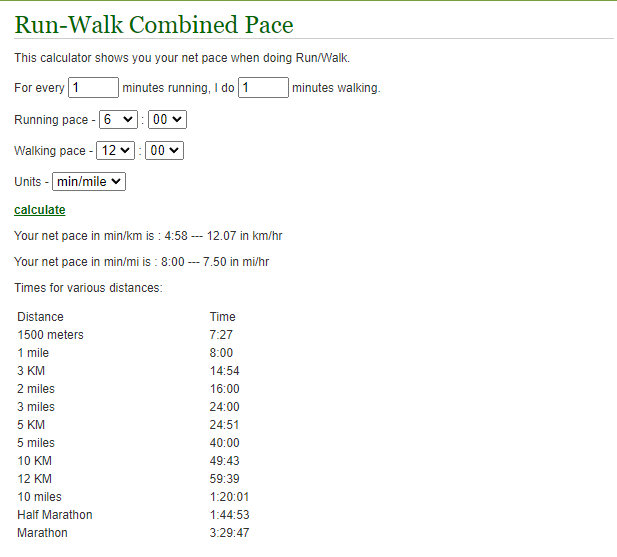
Remember – walking is moving and moving is better exercise than sitting!
Cross-Training
On the days you do not have a run scheduled, you should feel free (and even encouraged) to cross-train. If you are unfamiliar with that word, you may have this idea that cross-training is some special thing that is going to be expensive or difficult to do. Which I hear cross-training, my mind immediately goes to images of CrossFit. Two different beasts. Cross-training is a simple idea. Add exercising without impacting your main form of exercise (running). Put simply, cross-training is doing some other activity like bicycling, stair master, swimming, a cardio class, etc. Nothing magical. Just keeping the body moving with variety.
Your running will benefit from things like improvements to your core/balance through weight training and endurance by cycling or swimming. If you are into yoga, your joints and muscles benefit from the stretching done. Heck, yoga or Pilates can help you with core strength and balance as well as discipline.
Injuries

It is important to listen to your body. Injury can known you our of a training schedule for extended periods of time and make coming back difficult.
General aches and sores (eg blisters/chaffing) are to be expected when running. Taking care of those as they arise by treating them appropriately (ice/heat, antiseptics/bandages) will prevent those things from turning into big problems.
A good rule of thumb for pain is that if it persists or prevents you from performing, then you should probably have your doctor or PT take a look. Better to be safe than sorry.
Ensuring you have proper clothing/gear in good condition will help prevent injury. Identifying when you need to back off and rest will also help in prevention.
Common runner pains include sore/stiff joints, muscle craps, blisters, chaffing. It is likely that at some point you will have a trip and fall while running, ensure wounds are cleaned and dressed.
Running Fatigue
I know I need to back off pace, walk or simply end a session if I find myself repeatedly dragging my feet. You’ve all heard the sound of your shoe scrapping the pavement or dirt. If that happens more than a couple of times, your tank is empty and you are having a difficult time keeping your feet elevated in stride.
Running fatigue can occur for various reasons, from physical overexertion to mental exhaustion. Here are some strategies to deal with and reduce running fatigue:
1. Improve Your Conditioning
- Gradual Progression: Increase your running distance and intensity gradually to allow your body to adapt. Sudden increases can lead to excessive fatigue.
- Cross-Training: Incorporate other forms of exercise, like cycling or swimming, to improve overall fitness without overloading the same muscle groups.
- Strength Training: Build muscle strength, especially in the core, legs, and glutes, to improve running efficiency and reduce fatigue.
2. Focus on Nutrition
- Pre-Run Fueling: Ensure you have a balanced meal with carbohydrates and proteins a few hours before running. For shorter runs, a small snack like a banana or an energy bar 30-60 minutes before can help.
- Mid-Run Fueling: On longer runs, you may want to supplement with carb gels or gummies every 30 minutes during a run to refill the tank and give you that boost of energy to keep moving forward or for that kick to the finish line.
- Hydration: Dehydration is a major cause of fatigue. Drink water throughout the day, and consider electrolyte drinks for longer runs.
- Post-Run Recovery: Replenish your body with a combination of carbohydrates and proteins after running to aid muscle recovery.
3. Improve Your Running Form
- Efficient Form: Work on your running posture, cadence, and stride to run more efficiently, which can reduce energy expenditure and delay the onset of fatigue.
- Breathing Techniques: Practice rhythmic breathing to ensure adequate oxygen intake. Deep, diaphragmatic breathing can help maintain a steady pace and reduce the feeling of breathlessness.
4. Incorporate Rest and Recovery
- Rest Days: Ensure you have enough rest days in your training schedule to allow your muscles to recover.
- Active Recovery: Engage in low-intensity activities, like walking or yoga, on rest days to promote blood flow and muscle recovery.
- Sleep: Prioritize getting 7-9 hours of sleep per night, as sleep is crucial for muscle recovery and overall energy levels.
5. Mental Strategies
- Mindfulness and Focus: Stay mentally present during your run. Focusing on your form, breathing, and the environment can help distract from feelings of fatigue.
- Positive Self-Talk: Use positive affirmations and motivational cues to push through tough moments.
- Break It Down: Mentally break your run into smaller segments or goals. Focus on reaching the next landmark or running for a few more minutes rather than the entire distance.
6. Listen to Your Body
- Recognize Limits: Pay attention to signs of overtraining, such as persistent soreness, lack of motivation, or extreme fatigue. Adjust your training accordingly.
- Pacing: Avoid starting too fast, which can lead to early fatigue. Learn to pace yourself, especially during longer runs.
7. Environmental Factors
- Adapt to Conditions: Running in extreme heat, cold, or humidity can increase fatigue. Dress appropriately, stay hydrated, and adjust your pace to the conditions.
- Vary Your Routes: Running the same route repeatedly can lead to mental fatigue. Explore new routes or change your routine to keep things interesting.
By addressing both the physical and mental aspects of running, you can effectively manage and reduce fatigue, making your runs more enjoyable and sustainable.
The End
Part 8 concludes the primer as initially conceptualized. I will, however, create addendums to address relevant questions or ideas that fit within the scope of a primer for new runners.
I hope you have enjoyed reading this primer and hopefully have gained something from it.