
Lifting the Lid on Nutritional Information
A great many people will at some point in life try to lose weight. Most won’t actually do anything about it other than wish. Of those that do take an active role in trying to lose weight, most of those will fail or only see a temporary change. On the reverse side are a smaller number of people that want to gain weight and will struggle to do so. Why? Why do people have such a difficult time with weight loss or gain?
Let’s take a deeper dive into the process and business of losing weight.
How to lose weight (the short version)
If you are wanting to lose weight, you probably think it will require at least one of the following:
- Dieting
- Exercise
Either of these things CAN result in losing weight, but they are not required. In reality there is a single thing that will guarantee you lose or gain weight. That one thing is consuming the appropriate amount of calories relevant to your goal. If your goal is to gain weight, then you need to consume more calories that your body needs to function each day. The opposite is true for losing weight. It is that simple.
Control your calorie intake and you’ll reach your goal.
What is a calorie?
A calorie is a unit of energy. In terms of nutrition, it is the amount of energy your body gets from the foods you eat. When you eat, your body breaks down the nutrients in food (carbohydrates, fats, and proteins) releasing energy that your body uses for various functions (e.g., breathing, moving, digesting).
Technically, one calorie (often referred to as a kilocalorie in scientific terms) is the amount of energy needed to raise the temperature of 1 kilogram of water by 1 degree Celsius. In nutrition, when we talk about “calories” on food labels, we’re really talking about kilocalories (kcal).
So, when a food item is said to contain 100 Calories, it means it provides your body with 100 kilocalories of energy.
1 Calorie (kcal) is 1000 calories. When you read calorie information on a food item, it is capital C Calories (like in the US) or kilocalories (kcalories or kcals) in other parts of the world. A food item that is labeled as 200 Calories or 200 kcals is actually 20,000 calories. You can safely forget this information as you will unlikely ever encounter lowercase c calories. If you do see something like 200 calories, just know that really means 200 Calories or 200 kcals.
Calorie relationship to weight gain
If calories are just energy, why does having too much energy make you gain weight? The answer to this is both simple and complex. The simple part is this…
If you take in more calorie energy units than your body can utilize, it is stored. That storage is realized as an increase in weight on a scale. If you take in less calorie energy units than the body needs, it will go to its stored calories which is realized as a decrease in weight on a scale.
The more complex answer is that calories come in 3 basic forms; proteins, carbohydrates and fats. Each of these come in even more forms like simple and complex carbohydrates, saturated/unsaturated fats, etc. These 3 basic form are called Macronutrients and each are utilized by the body as energy and make up the caloric value of the foods you consume.
Here is a quick breakdown of how each of these are utilized by the body and what happens if the body does not need the energy they provide:
Carbohydrates
When carbohydrates are not immediately burned as energy by the body, they are stored for future use. Here’s how the process works:
- Glycogen Storage:
- After you eat carbs, they are broken down into glucose (a type of sugar) and enter your bloodstream.
- If your body doesn’t need immediate energy, the excess glucose is stored as glycogen in the liver and muscles.
- Your body can store a limited amount of glycogen, which is used as a quick energy source during activities like exercise or when your blood sugar levels drop.
- Fat Storage:
- Once glycogen stores in the liver and muscles are full, any excess glucose is converted into fat through a process called lipogenesis.
- The glucose is transformed into fatty acids and stored as triglycerides in adipose tissue (body fat).
- This stored fat acts as a long-term energy reserve, which your body can use when needed, such as during prolonged fasting or physical activity.
In summary, carbohydrates that are not burned off through activity or bodily processes are first stored as glycogen and, if those stores are full, they are converted into body fat.
Fats
When you consume more fat than your body needs for immediate energy, the excess is stored in a relatively straightforward way:
- Immediate Use of Fat:
- Fats, or lipids, are broken down into fatty acids and glycerol in the digestive system.
- These fatty acids are absorbed into the bloodstream and used for energy by the body, particularly during activities that require sustained, lower-intensity energy (e.g., walking or at rest).
- Fats are an efficient energy source because they provide 9 calories per gram, compared to 4 calories per gram for carbohydrates and proteins.
- Storage of Excess Fat:
- If the body doesn’t immediately need the energy from fats, they are stored in adipose tissue (body fat).
- This process involves recombining the fatty acids and glycerol into triglycerides, which are stored in fat cells (adipocytes).
- The body has a nearly unlimited capacity to store fat, so excess fat intake is easily stored for future use.
- Minimal Conversion:
- Unlike carbohydrates and protein, which can be converted into fat if consumed in excess, dietary fat is typically stored directly as fat in your body.
- The conversion of dietary fat into body fat is a more efficient process, meaning the body doesn’t need to spend much energy to store it.
In summary, when you consume more fat than your body needs, it is stored almost directly in fat cells as triglycerides, where it can be accessed and used later when energy is needed.
Proteins
When the body consumes more protein than it needs for immediate functions, the excess protein is handled in a different way compared to carbohydrates and fats. Here’s how excess protein is stored or used:
- Protein for Immediate Needs:
- When you eat protein, it is broken down into amino acids, the building blocks that the body uses to repair tissues, build muscle, create enzymes, and support various bodily functions.
- Amino acids are used primarily for protein synthesis (building and repairing tissues) and for other processes like producing hormones and enzymes.
- Excess Protein:
- The body does not store protein in the same way it stores carbohydrates (as glycogen) or fats (as triglycerides). There’s no large reserve of protein stored for future use.
- When the body has more protein than it needs, it converts the excess amino acids into energy or fat through a process called deamination.
- The amino group of the amino acids is removed, and the remaining carbon skeleton can be converted into glucose (in a process called gluconeogenesis) or fat and then stored as fat if not immediately used for energy.
- The amino group is converted into urea and excreted from the body through urine.
- Fat Storage:
- If the body’s energy needs are met and there’s still excess protein, it can ultimately be converted to fat and stored in the body’s fat tissues, similar to how excess carbohydrates are stored.
In short, excess protein is not stored as protein but can be converted into energy or fat when the body has no further need for it.
Conclusion
Consuming more calories (regardless of macro makeup) than your body needs to burn as energy will ultimately be stored as fat.
Burning Stored Fat
In order to get rid of body fat, thereby losing weight, you have to maintain a caloric deficit. Your body requires a certain amount of energy to maintain homeostasis. Your body then requires extra energy to perform additional functions like digestion or physical activity. By consuming fewer Calories than the body needs for these processes, it has to go to its stored energy.
Summary of Energy Use in Sequence:
- Glycogen (glucose stored in liver and muscles)
- Fat (from adipose tissue, providing long-term energy)
- Protein (from muscle tissue, as a last resort)
In normal, day-to-day activity or moderate exercise, the body primarily relies on glucose and fat for energy, with protein being spared for vital functions unless the situation becomes extreme.
Calculating Calories
The caloric value of food is determined by the amount of macronutrients in that food. The following is used to calculate total caloric value:
- 1g Carbohydrates = 4 Calories
- 1g Protein = 4 Calories
- 1g Fat = 9 Calories
Those Calorie figures represent the amount of energy required to breakdown
Example: How many Calories are in a food item that has 12g Carbs, 8g Fats and 8g Protein?
carb(12g * 4) + fat(8g * 9) + protein(8g * 4)
carb(48kcal) + fat(72kcal) + protein(32kcal)
48+72+32 = 152 kcals or 152 Calories.
Tracking Calories Consumed
In order to ensure you are are hitting your goal of either weight gain or loss, you need to be active in tracking your calories. This means weighing your food and understanding the macro makeup of the foods you are eating.
I know that weighing and logging your meals can seem like a time consuming process and at first it will take you time to get it down. There are tools like MyFitnessPal that can help you with that task. Not only does it have most any food items macros stored, but if you pay for the premium version you can simply can the barcode of food items to log it. You will still need to provide the portion size.
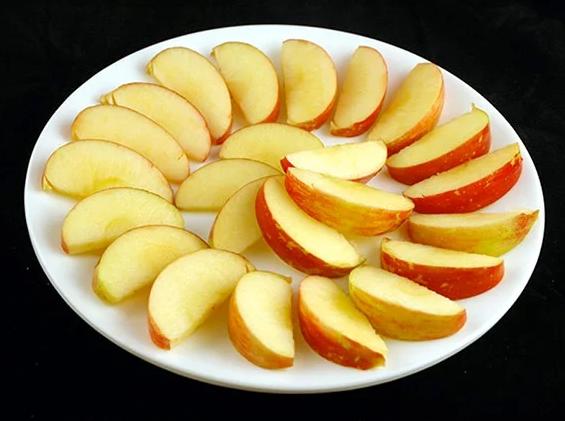
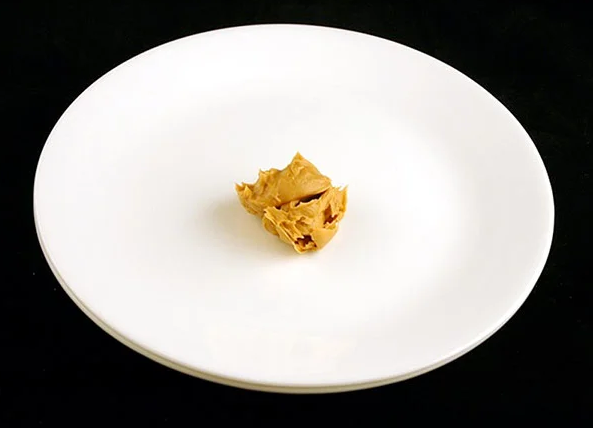
Humans are generally bad at guessing portion sizes and the caloric value of those portions. Here are two food items that are both 200 Calories:
Additional Notes
- Fiber and Sugar Alcohols are a type of carbohydrate that are not included in the Calorie calculation. These are not absorbed by the body and are therefore not used as energy.
- Micronutrients are the additional things found in food that are utilized by the body, mainly vitamins and minerals. Micronutrients are not part of the caloric makeup of foods.
- When you lose fat weight, fat cells shrink. You do not lose fat cells, instead the triglycerides in those cells are removed and used for energy when the body needs to go to its fat storage which decreases the size of the adipocytes (fat cells).
- The process of adding triglycerides to fat cell, thus expanding the size of adipocytes and increasing your body weight is called Hypertrophy.
- The breakdown of the food you eat (digestion) requires energy as well. Approximately 10% of your total daily caloric intake is burned in the process of digestion. This process is called the thermic effect of food (TEF). So if you take in 2000 calories, approximately 200 of those calories are used just to breakdown the macronutrients.
Final Thoughts
Quite a bit of the information provided in this post is something you can file away in the trivia category of your brain. The important thing to note is that Calories = Energy and when you don’t need Energy right now, those Calories will be stored as weight on the scale.
If you are wanting to increase the number on the scale, take in more Calories than you need.
If you are wanting to decrease the number on the scale, take in less Calories than you need.
One question that comes up frequently for people who are dieting; If I mess up my diet or have a cheat day, how will that affect my weight loss? The best way to illustrate the effect is this:
First find out what daily Calorie deficit you should be aiming for by using an online calculator like the Body Weight Planner from the NIH. The NIH calculator will give you the amount of Calories you should consume to maintain current weight and the amount you should consume to hit your goal weight. Subtract the goal number from the maintenance number to get your daily caloric deficit.
If we assume that number is 700 Calories, then in a 7 day week that is 4900 Calories you’ve given up for the week. If you had a cheat day where you had pizza and cake and ice cream and chips, etc. and that day you ended up consuming 2000 Calories more than you intended, you’ve lost half a week’s work in one day.