

Running Primer – Part 7
Stretch It, Stretch It Good…
In the previous parts of this primer, you’ve been introduced to running concepts, terminology and given an example training plan for someone new to running. Before turning you loose on the road, track, trail or treadmill we need to discuss one last topic; Stretching.
The questions are; what is it, why do it, how to do it and should you do it. The last question potentially being the most important. Stretching before doing a physical activity was just one of those thing you did automatically. It never dawned on me to ask if I should be doing that. It wasn’t until quite recently that I stumbled onto there even being a debate about this, that this debate has been on-going for a long time and that there really isn’t much consensus about the question.
Let me preface this by first clarifying that I am not endorsing a position. I am giving you information and also my opinion/practice. For the first 9 months of so of my journey into running, I religiously did static stretching (don’t worry I will get into the terms momentarily). I have since stopped all stretching in favor of simply doing a warm-up walk/jog/run at a very slow pace prior to my actual workout. The idea being that the warmup is already… err.. warming up those muscles and joints that will be activated in the workout.
If I am feeling particularly tight or am experiencing any pain related to stiffness or inflammation then I will do dynamic stretching before a warmup. My personal decision to go this route was based on my having gone down the stretching rabbit hole.
The following is going to be an introduction to different stretching strategies and scientific information available about those strategies. Keep in mind that this information is not specific to running and due to the breadth of activities that may or may not benefit from stretching strategies, studies have a difficult time pinning down broad recommendations.
The debate over the best type of stretching before running—static stretching, dynamic stretching, or no stretching—has been ongoing, with research supporting different approaches. Here’s an overview of the controversy:
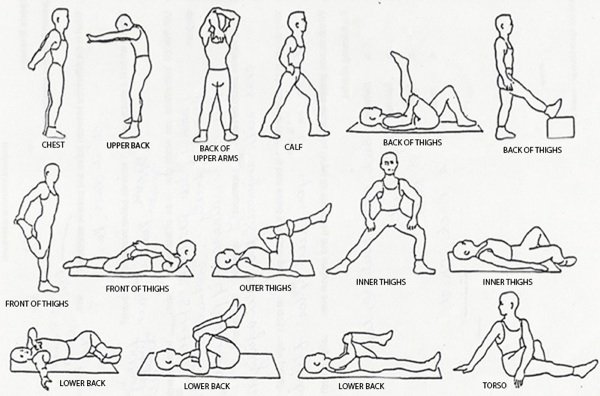
1. Static Stretching Before Running
- What It Is: Static stretching involves holding a stretch for 15-60 seconds to elongate a muscle and improve flexibility.
- Pros: Increases flexibility and range of motion.
- Cons: Studies suggest that static stretching before a workout can reduce muscle strength, power, and performance, particularly in activities requiring explosive movements like sprinting.
- Key Studies:
- A study by Kay and Blazevich (2012) reviewed the effects of static stretching on performance and found that while long-duration static stretching (>60 seconds) can impair muscle performance, shorter stretches (?60 seconds) have negligible effects.
- Behm and Chaouachi (2011) discussed that static stretching may reduce force production, running speed, and reaction time for certain burst activities like sprinting/jumping.
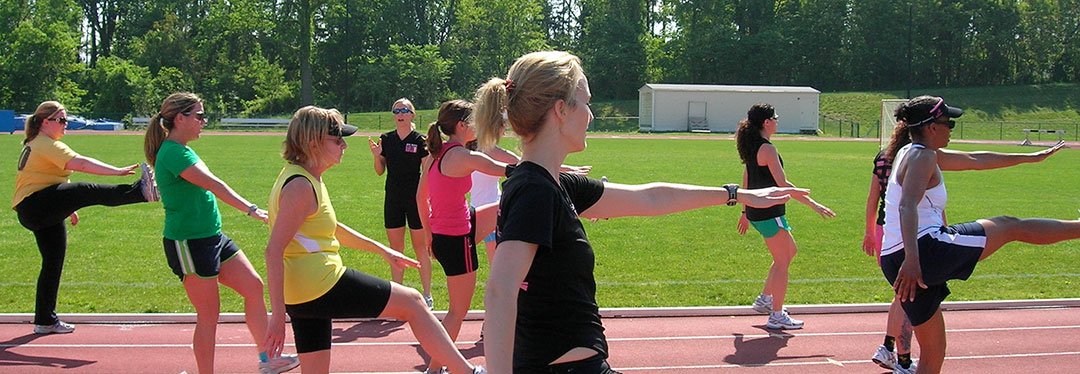
2. Dynamic Stretching Before Running
- What It Is: Dynamic stretching involves moving parts of your body through a full range of motion, mimicking the movements of the upcoming activity (e.g., leg swings, lunges).
- Pros: This type of stretching is believed to better prepare the muscles for the activity, improve muscle temperature, and enhance overall performance.
- Cons: Some argue that if done too aggressively, dynamic stretching could potentially lead to muscle strains.
- Key Studies:
- A study by Samson et al. (2012) showed that dynamic stretching improved performance in vertical jumps, sprinting, and agility tests compared to static stretching or no stretching.
- Fletcher and Anness (2007) found that dynamic stretching can improve running performance by enhancing flexibility and muscle activation.

3. No Stretching Before Running
- What It Is: This approach involves skipping dedicated stretching and instead performing a general warm-up to gradually increase heart rate and blood flow to muscles.
- Pros: Some suggest that a general warm-up might be sufficient to prepare the muscles for exercise without the potential negative effects of stretching.
- Cons: Lack of stretching might lead to insufficient muscle flexibility, increasing the risk of strains, particularly for those with existing muscle tightness.
- Key Studies:
- Pope et al. (2000) conducted a large-scale study on military recruits and found no significant difference in injury rates between those who stretched before exercise and those who didn’t, suggesting that warm-up alone might be sufficient for injury prevention.
- A review by McHugh and Cosgrave (2010) highlighted that while warming up is essential, stretching might not contribute significantly to injury prevention and performance enhancement.
Conclusion
The optimal pre-running routine may depend on individual needs, the type of running (e.g., sprinting vs. long-distance), and personal preferences. Dynamic stretching generally has more scientific support for enhancing performance, particularly in activities requiring power and agility, whereas static stretching might still be beneficial in certain contexts if not overdone.
As a beginning runner, the distinctions may be less impactful and what you decide will probably we weighted more heavily to personal preference. I would encourage you to look into this topic more if you are interested in moving forward with performance goals. That is when decisions about this could be more impactful. You can also talk with a trainer (if you decide to use one) or your primary doctor to get a better idea how you should be implementing a stretching strategy.
Suggested Reading (Scientific Papers)
- Kay, A. D., & Blazevich, A. J. (2012). Effect of acute static stretch on maximal muscle performance: A systematic review. Medicine & Science in Sports & Exercise, 44(1), 154-164. Link to paper
- Behm, D. G., & Chaouachi, A. (2011). A review of the acute effects of static and dynamic stretching on performance. European Journal of Applied Physiology, 111, 2633-2651. Link to paper
- Samson, M., Button, D. C., Chaouachi, A., & Behm, D. G. (2012). Effects of dynamic and static stretching within general and activity-specific warm-up protocols. Journal of Sports Science & Medicine, 11(2), 279-285. Link to paper
- Fletcher, I. M., & Anness, R. (2007). The acute effects of combined static and dynamic stretch protocols on fifty-meter sprint performance in track-and-field athletes. Journal of Strength and Conditioning Research, 21(3), 784-787. Link to paper
- Pope, R. P., Herbert, R. D., Kirwan, J. D., & Graham, B. J. (2000). A randomized trial of preexercise stretching for prevention of lower-limb injury. Medicine & Science in Sports & Exercise, 32(2), 271-277. Link to paper
- McHugh, M. P., & Cosgrave, C. H. (2010). To stretch or not to stretch: The role of stretching in injury prevention and performance. Scandinavian Journal of Medicine & Science in Sports, 20(2), 169-181. Link to paper
Examples of Static and Dynamic Stretching
If you choose to do static stretches for running, here is a video that demonstrates stretching exercises you can perform:
If you choose to do dynamic stretches for running, here is a video that demonstrates common exercises you can perform:
Flexibility
Static stretching does have a benefit that seems to be a consensus. It helps you with flexibility. If you choose to forgo static stretching for your running warmup, you can still incorporate static stretching in either your cooldown or on your off days to promote joint flexibility.
Up Next…
We are approaching the end of the primer. I have one more part planned before wrapping it up. Part 8 will be miscellaneous topics and tips that may be useful to new runners.
Thank you for taking the time to read this primer and please feel free to ask questions or suggest topics or corrections for an addendum.