
Running Primer – Part 4
Primer Recap
- Part 1 of the series, covers why I started running and tasked you with deciding what type of runner you’d like to be.
- Part 2 of the series, covers different distances that competitive runners typically choose from.
- Part 3 of the series, covers ways to establish a training plan and various resources available to track your progress.
The confusing world of running terminology
Before I get into actual terms you may typically see in a running training plan, I wanted to preface the information. If you were to look up each of these terms you’ll likely find different and perhaps seemingly contradictory explanations for each. Thus is part of why understanding running lingo is so difficult. Because of the various ways the terms can be used, I struggled with how best to present this information. In the end I decided to group the various terms by a primary focus of training. If you are finding a disconnect when talking to others about your workouts, try describing the elements of the workout and others will internally translate that into however they understand the terminology.
An example of this: When telling someone you did a tempo run today, they may be thinking you did a run that included repeats and respond back as if you did an interval run. When you realize there is a disconnect, you can describe the run you did as a 10 minutes in zone 2, 20 min at threshold pace and ended with 10 more minutes in zone 2. They may call that type of run something different, but will have understood the session breakdown.
Don’t worry, I will cover what zone 2 means in a later part of this series.
Running training workouts can generally be categorized into two main groups based on their primary focus: endurance and speed. Each type of workout serves a specific purpose in a runner’s training plan, helping to build different aspects of fitness. Here’s a breakdown of the key workouts you are likely to find in training plans for each category:

Endurance Workouts
These workouts build aerobic capacity, stamina, and the ability to maintain a steady pace over long distances. They are crucial for overall cardiovascular fitness, especially for long-distance runners.
Long Runs (aka Long Slow Distance or LSD)
Long runs involve running at a steady, comfortable pace for an extended period.
The primary goal is to increase the body’s ability to sustain running for longer durations and distances, enhancing endurance and mental toughness.
Example: A marathoner might do a 15 to 20 mile long run at a pace that is 1 to 2 minutes per mile slower than their marathon race pace.
I dread these runs at the beginning of the session. However, when I finish them, man that feeling of accomplishment is something else.
Easy Runs (aka Short Runs or Recovery Runs)
Easy runs are done at a relaxed, conversations pace. You cannot go too slow on these runs. These will make up the majority of the runs in your training especially if training plan includes running 4 or more days a week.
These run promote recovery from tougher workouts and increase aerobic capacity without placing undue stress on the body, helping build a base of mileage.
Example: A 2 mile run at a pace where you can maintain a conversation or sing to yourself.
This workout for me, and probably for a lot of people, is the most enjoyable. I don’t have to put a lot of thought into these runs. I just run. I do have to watch my tendency to increase pace as the run goes on. I naturally pick up pace as my body gets more relaxed with my current pace.
Tempo Runs (aka Threshold Runs)
These runs are performed at a “comfortably hard” pace. Of all the workouts, this one has the least consensus about what they are and how they should be done. The basic idea is that you are performing a run for a set amount of time or distance where a significant portion of that run is done at a faster than normal pace but one you can sustain over that distance. The distance for this run will somewhat be dictated by the pace. This workout should push you up to, but not over your lactate threshold.
I will explain lactate threshold in a later part of this series.
This type of workout helps improve your lactate threshold. It trains the body to hold a faster pace for longer without fatigue.
Example: A 40 minute run where the middle 20 minutes are done at a pace that is around 85-90% of your maximum effort.
Progression Runs
This type of workout starts at an easy pace and gradually increases in speed through the workout
It trains the body to finish strong and manage increasing fatigue. It is of more value to longer race distances.
Example: A 10 mile run where the first 5 miles are at a conversational pace, the next 3 miles one zone up and the final 2 miles at tempo pace.
I personally have a difficult time with pacing, so workouts like this were maintaining a consistent pace for long periods is especially tough. In a later section of this series I will talk about a trick I used early on to help me stay on pace.
Speed Workouts
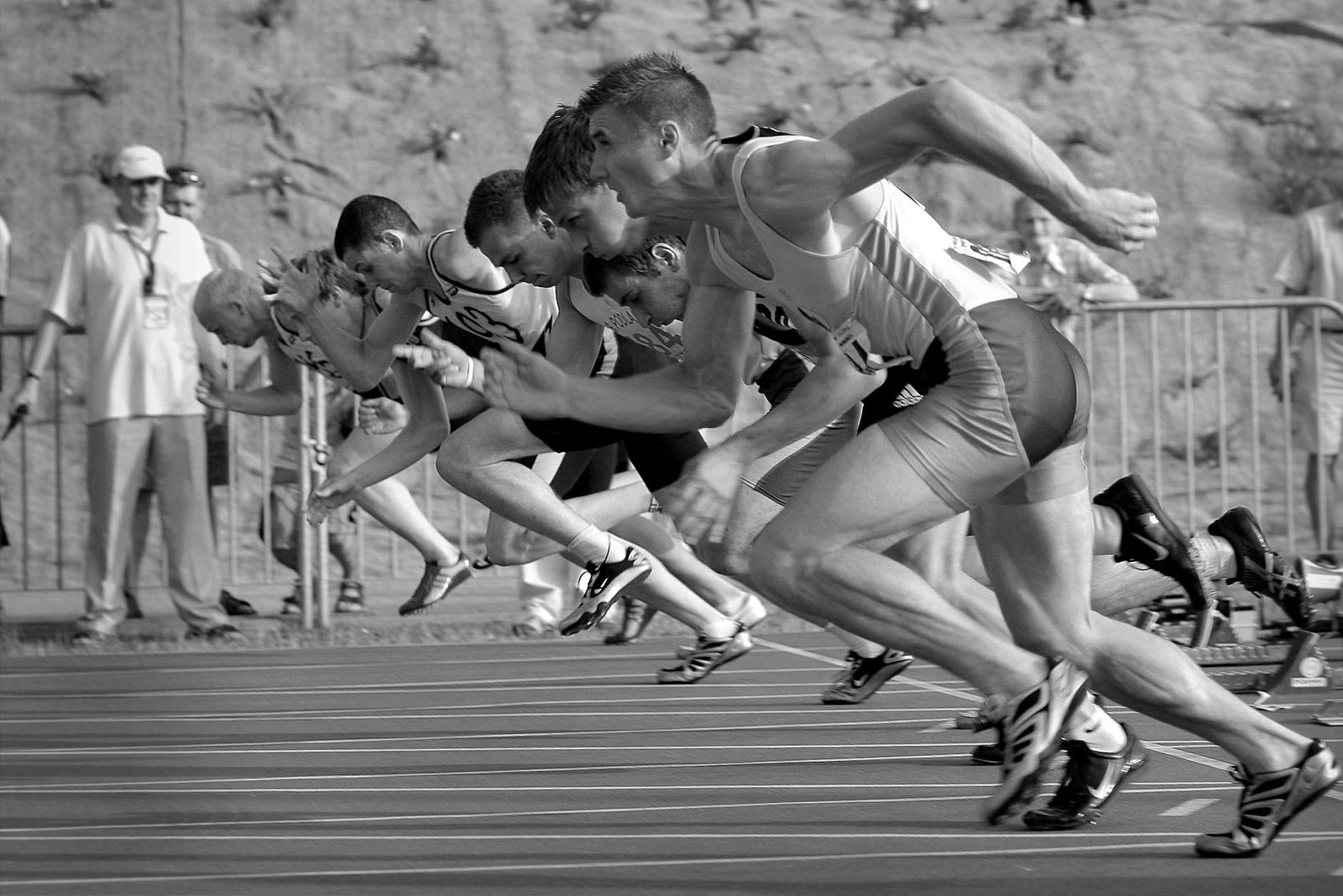
Speed workouts focus on improving anaerobic capacity, leg turnover, and overall running economy. They are essential for those aiming to improve race times and increase speed.
Intervals (aka Repeats)
These involve alternating periods of high-intensity running followed by a recovery period, repeated a set number of times for a set distance or time, typically over significant distances (several hundred meters).
These workouts push the body to run at speeds close to or faster than race pace. The goal is to improve speed, endurance and the ability to sustain faster paces over longer distances.
Example: 6 x 800 meters at 5k race pace with a 2 minute recovery (walking or jogging) period after each of the 6 intervals.
Anytime you see a workout that takes the form of A x B it is referring to doing B however many time indicated by A. It is describing sets. In the above you are repeating the 800 meter drill a total of 6 times.
Strides (aka Repeats)
Similar to intervals, but done at much shorter distance or times. These are short bursts of speed, typically done at the end of an easy run. You should be paying attention to your heart rate zones, getting a good cardio bump.
These workouts enhance leg turnover with a focus on running form.
Example: 6 x 20 second strides at about 85-90% of your maximum effort with a full recovery between each set by walking or jogging.
Probably my favorite workout. I know I just have to go all out for a short time and then I get to rest.
Hill Strides (aka Hill Repeats)
This workout involves running up a hill at a hard effort, followed by an easy jog or walk back down hill for recovery. As with strides, these are short bursts of speed for a given distance or time.
Hill work builds strength, power and improves running form. Especially important if you have an upcoming race that involves hills.
Example: 8 x 45 second uphill sprints with a walk/jog after each set.
This is my least favorite workout. Hills just suck.
Fartlek
This is a Swedish word meaning “speed play”. It is a form of speed work that is unusual in that it is meant to be playful in execution. As with other speed work, this workout involves bursts of speed but done in a random, unstructured way. Instead of using time or distance, this workout is usually done using landmarks or feelings.
Fartleks add variety to training, improves speed and teaches the body to handle changes in pace. It is also meant to be playful and give your mind a break from the rigors of structured workouts.
Example: Start out on a normal run at a conversational pace, choose some marker ahead like a sign, post, tree, shadow, fire hydrants, or whatever you see in a relatively short distance head and sprint until you reach it, then jog/walk to another marker ahead, back to a conversational pace for a bit then repeat. Do this several times over a set amount of run time like 45 minutes.
When I first started running, when it really hurt to run and I could only run for short periods, I naturally did this type of running. I had never heard the term fartlek and wouldn’t hear if for many months after I used it. I would typically pick a street sign, the end of a fence or a shadow from the trees and run until I got to those markers. I liked choosing shadows because it was cool in the shadows and it was like rewarding myself for the running I just did.
Conclusion
By incorporating both endurance and speed workouts into your training plan, you can build a well-rounded level of fitness, improve performance, and reach your running goals.
Still to come…
In coming parts to this series; I will provide a sample training plan, discuss other words/terms you’re likely to encounter, provide tips/tricks that I have learned or picked up in my journey so far and address some common questions I (and others) have had when starting out on a running journey and entering races.
If you have questions about the information I have presented thus far OR you have questions about something I haven’t addressed, please use the comment feature below to ask those questions and I will do my best to include answers in coming segments. Also, please use the comment feature to share your favorite types of training sessions or race distances.